Abstract -
Innovations are born out of a necessity. So by definition, they are mostly good in intentions or at worst - part of the numerous experiments, trying to find the best way to solve a specific problem often with limited visibility of future.
What defines if they were good or bad or had shades of gray, is the hindsight - what kind of economic incentives it planted?
How did society respond to them? And the whole domino effect it created, which has the power to change the destiny of society we live in or are going to live with in future.
A technology or innovation is never bad; seeking appropriate profit from an innovation is a healthy practice. But the problem starts when we detach morality, forget local values and traditions, trade long term sustainability and externalize the cost on the environment, public health to seek private and abnormal profit.
We will take a couple of innovation extraordinaire and see why they started, impact on current society with scope for course correction. This paper looks at the evolution of food processing industry in the developed world with a focus on the USA, and the form it’s taking now in a developing nation like India.
We will elaborate on community health, cultural and environmental impacts in both the countries, the course corrections happening and what should be done in the future. The paper argues that policy and regulatory level support to maximize profits for food processing industry may produce catastrophic results based on our food habits, population density, strained natural resources, dismal preventive healthcare infrastructure, and practices.
Introduction
Communities have historically developed various ways to preserve food, such as sun drying, pickling, roasting, steaming, baking sailors and warriors and for bad seasons. The necessity to industrially process raw farm produce chemically to increase shelf life came out of military needs. The wars especially World War II facilitated huge industrial infrastructure and market incentives for industrialized food processing (Roberts, 2008), the same way it created a weapon and advance warfare industries all across the developed world.
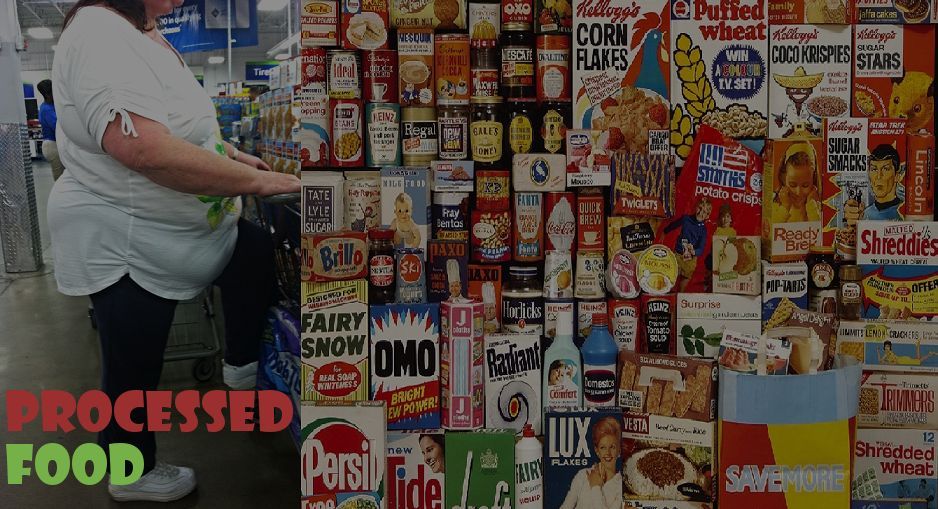
Post World War II, western world especially the USA binged on industrially produced and processed food. Creative marketing backed by big dollars and media penetration peddled this as a dream of convenience and prosperity to the middle class. For example, in 1977, out of 100 advertisers, 48 were food manufacturers. Food manufacturers spent $4 billion in 1977 (25% of the total manufacturing sector advertisement budget) (Mather and Davis, 1979). This was the same era of experimentation when smoking cigarettes were the fashionable thing even on airplanes.
With their new found wealth, a cutthroat way of life in industrial and services sector and “time is money” philosophy, the idea of ‘your food prepared somewhere else’ caught fancy across classes in the USA. Advertisements declared it’s the better food, fortified, value added and tastes great, just prepared by someone, somewhere else so you can go and do great stuff. And it’s good for an economy.
So isles after isles in mega superstores filled up with concentrated, powdered, dried up transformed, colored, pickled, frozen ready to heat and eat, wrapped up neatly in plastic, tetra packs, tin cans. Building an economy with $538 Billion value of food shipment from the USA alone in 2006 (U.S. Department of Commerce Industry, 2008).
Below is an analysis, in the hindsight what it did to American food habits and society at large and where it is heading now:
First a few facts
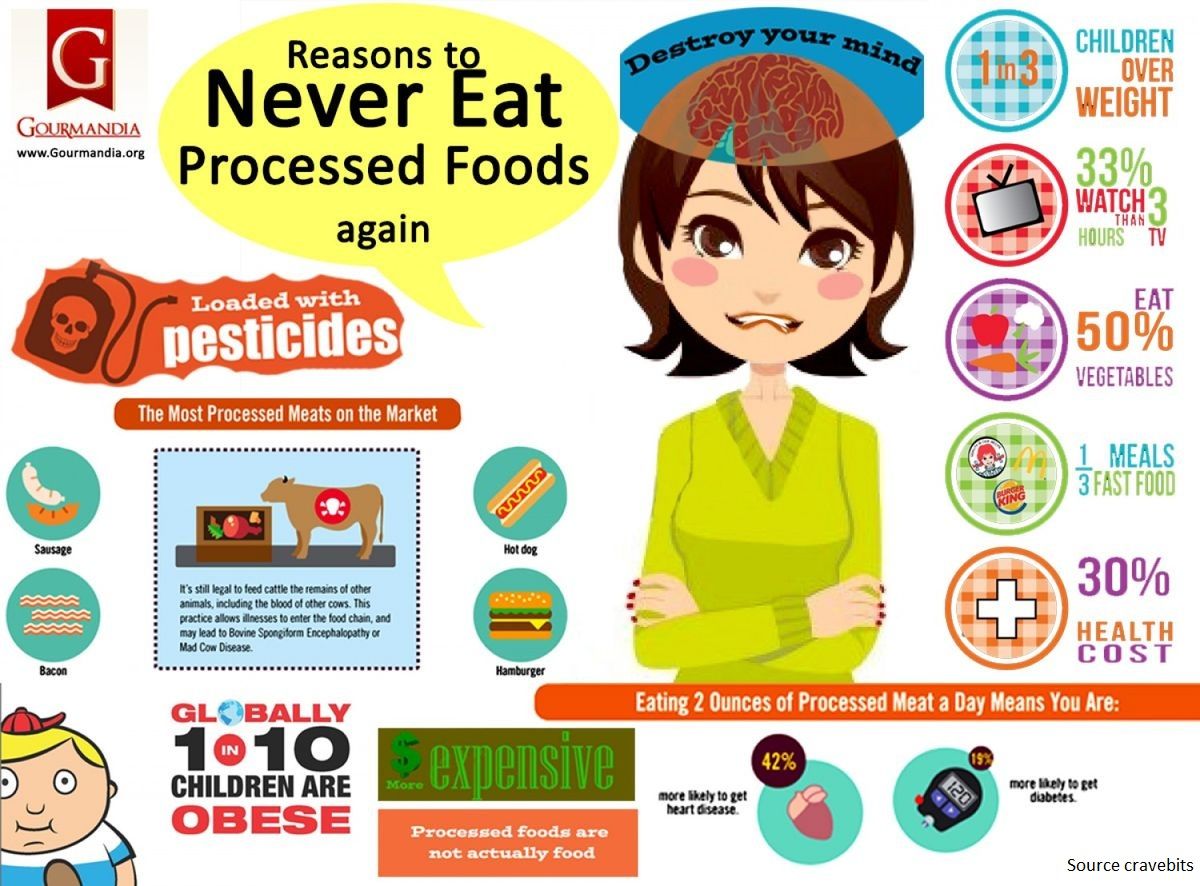
- More than 2/3 of adults are overweight or obese (Ng et al., 2014).
- Major causes of deaths in the USA are heart Disease, Cancer, Stroke, Diabetes i.e. mostly diet related ailments (Center for Disease Control and Prevention, 2014)
- Though in early 1900, more than half of Americans were either farmer or lived in rural communities and before World War II US farmers cultivated a variety of crops, along with livestock’s, on what are called diversified farms. America is now by and large a mono-crop country and a world leader in growing corn (478 Million Tons) (United States Department of Agriculture, 2015), genetically modified towards maximum yield per hectare and for industrial usage like fuel, fodder for meat and milk, High Fructose corn syrup and derivatives used by food processing industry. The crop is not used for direct human consumption. (John Hopkins Bloomberg School of Public Health, 2015).
- Researches have started pointing towards loss of major microbiome in the gut which fights obesity owing to general nature and lack of ingredient diversity in processed food. These lost micro-biomes not passed through mothers make generations obese. (Maria Dominguez-Bello, 2015)
- The rise of harmful bacteria like two species of harmful oral bacteria that increases our susceptibility to cavities and gum disease. (Science Education Partnership Award (SEPA) program of the National Institutes of Health (NIH), 2013)
Now a few anecdotes based on living in the USA for more than a decade.
- Fresh local products are hard to get and much more expensive than canned or frozen counterparts.
- Huge and increasing percentage of American families have lost the art of preparing food, its either take out, eating out or assembled from frozen food. With lot less diversity in food items.
- Families and children have lost contact with where food comes from, i.e. farms. The packaging hides all the details.
Why processed food is so bad, let’s break it down. Food processing business follows revenue maximizing model – It’s all about increasing flavor and shelf life while keeping the cost low. How to do this
- Biggest flavor enhancers are salt, sugars, and fats, natural or otherwise. So processed food has a lot.
- To keep longer shelf life chemical preservatives are first choice, if not salt, sugar and fat are the second choices.
- Food packaging an integral part of processed food industry, is going to be $306 billion (Markets and Markets, 2014) in market size. So the volume of plastic and related product hitting our waste management system is tremendous.
- To keep the cost low it adds market incentive to over produce in farms and make sure farms only produce raw material most suitable for food processing industry. (John Hopkins Bloomberg School of Public Health, 2015)
- A food item loses its nutrition every time it’s processed, heated, reheated sometimes by as large as 70% (B-12 for milk for e.g.).(USDA, 2007), the artificial “value added” nutraceuticals are highly controversial in the scientific community.(Paul Malik, 2007)
- Food enzymes are deactivated to increase shelf life, leading to strain on human gut digesting food.
A 3.3 trillion industry (Allied Market Research, 2015) has enough levers to do exactly things listed above. So when we see
• Mono-crop farming
• Over usage of pesticide.
• Chemical fertilizers.
• More and more industrialized methods depleting natural resources like groundwater, soil quality.
• Genetically modifying crops to increase quantity letting go of quality and nutrition since it can be “value added” cheaply and artificially later.
It can be fairly assumed what the economic forces are behind. And this is exactly what happened in America, no wonder industrial grade burgers, fries, aerated drinks, and pizza are the biggest gastronomical innovations gifted to the world by the country.
So are there any lessons learned? Yes, it’s changing slowly but steadily. Natural and Organic food sales soared by 72% since 2008. (USDA, 2015.) Organic food chain whole Foods has a market cap of $9.85B (NYSE, 2016), Organic and fresh produce user restaurant chain chipotle has the market cap of $13.75B (NYSE, 2016). Higher priced but organic and natural diverse food produce is making headways in the USA.
Communities across the USA are supporting more and more local and organic produce and businesses using them. Increasing number of chefs had seen procuring ingredients from the farmers market and supporting home cooking in public.
Famous food authority Anthony Bourdain who is building a multicultural fresh food market in New York City Chelsie Pier (New York Times, 2015) with over 100 wholesale food vendors from USA and overseas, including fishmongers, butchers, bakers and other food artisans recently quoted: “In a perfect society everybody should be able to feed themselves, their friends and family at least reasonably well and if they are not able to do that, they should be shunned, demonized and marginalized”. (CNN, 2014)
So there has been a tide reversal and it's happening very fast, with the research community, food professionals, the general public, and millennial leading the efforts for a healthier and holistic future for their children.
Changing food habits in India, its impact and course of correction if needed
Historically India has been a society where home cooked meal is given preference over any other mode of food preparation. We get our produce from local mandi which is locally sourced most of the time, we cook three meals a day and our food is very diverse ranging from wheat, rice, war, bajra, ragi etc, all kind of leafs, vegetables, fresh fruits, pulses, diverse range of beans and a vast range of spices and it changes with every region – from north to south. We are connected with farms, raw produce and mandis, pick and choose from a vast range of options. So if we look closely what we have been doing for the generation, is now being replicated and boasted in America to save its food future from the catastrophic damage done by food processing industry.
But what India is doing and planning at policy level
As per the current research statistics, the food processing economy is expected to be around $3.3 trillion (Allied Market Research, 2015) in revenue by 2020 with India and China expected to show significant market growth. The same is seen in the packaging industry in India estimated to be one of the top two markets. How is it possible? India has been a food culture when the world was inventing weapons we were experimenting with food (and music). The diverse range of fresh food innovations over thousands of years, recipes shared across generation is matter of our pride. We eat fresh, we eat well and are a beacon of hope, the melting pot of the world.
What changed, why our markets are suddenly filled with pesticide riddled produces, why food has stopped tasting the same as ten years ago? Why have diabetes cases in India doubled since the year 2000? (SA Kaveeshwar, 2014)
No need to look at statistics - just go out and look on Indian streets, it’s a parade of potbellied obese and often unhealthy citizens, worst part our children are losing the battle of good health. Being a low-income country with per capital GDP world ranking at 143, we are already the 3rd most obese country in the world (M Ng, T Fleming, M Robinson, et al., 2013). But based on our food culture how it happened?
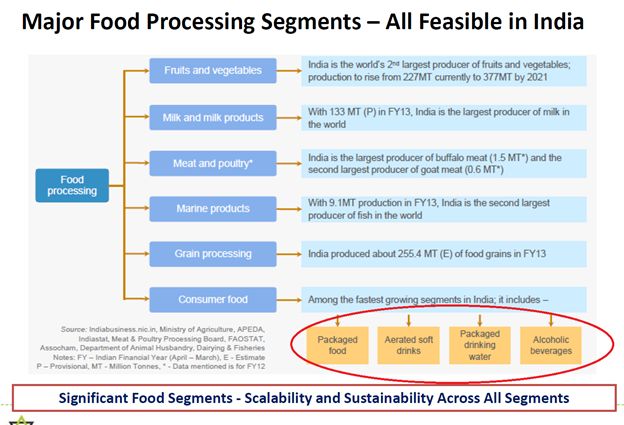
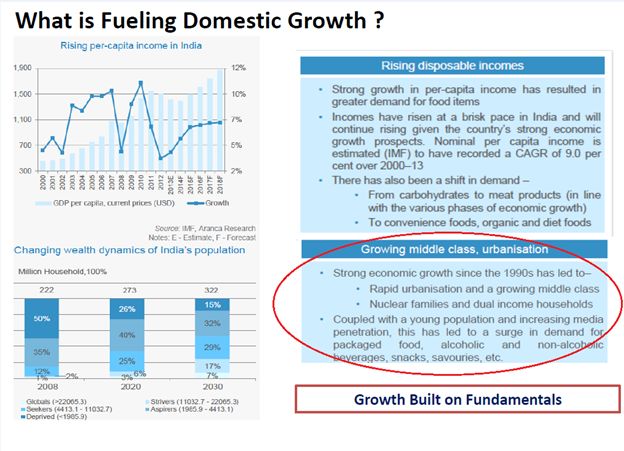
The answers are hidden in the snippets of presentations made by one of the 48 Mega food processing parks India is building under ‘Make in India’ food processing initiative with a focus on providing cold chain, and linkages to farmers with food processing industry. It is great to provide cold chain linkages to stop food wastage but what caught real attention is the presentation made by one of the food parks under Make in India Week 2016. Figure 1 and 2.
Figure 1: Major food processing segments – scalability and sustainability (Ministry of food processing Industries India, 2016)
Figure 2: What is fueling domestic growth – growth built on fundamentals (Ministry of food processing Industries India, 2016)
These presentations say it all,
- Similar to the post-World War II the USA food processing industry, it’s boasting about opportunities for aerated drinks, packaged food, packaged drinking water, and alcoholic beverage.
- We are somehow linking middle-class prosperity and lack of time with a market opportunity for processed food economy fueled by media penetration.
Adding to above.
- Indian food processing Industry ranks 5th in terms of production, consumption, and exports, accounts for 32% of the total food market, 14% of manufacturing GDP and projected to be at $78 Billion by 2018. (IBEF, 2016)
- There is been a policy level push allowing 100% FDI with an expected investment of USD $33 Billion over next 10 years. (IBEF, 2016)
- 42 new mega food parks dedicated for food processing planned over next 4 years. (IBEF, 2016)
- A corpus of $300 million setups and Excise duty on plant and machinery for packaging and processing has been brought down to six per cent from 10 per cent.(IBEF, 2016)
So are we on our way to do the same mistakes the USA did decades ago and is now struggling to recover from? Even with its high education levels, general prowess in economy and way advanced science, technology, and innovation.
- Don’t we understand with our food habits, population density, strained natural resources, dismal preventive healthcare infrastructure, and practices, setting up tremendous economic incentives for food processing industry at the policy level can produce catastrophic results?
- Do we have a mechanism in place to stop food processing industry from subjugating our age-old sound agricultural practices, evolved around the essence of our people and land?
- How do we stop profit-maximizing interests from promoting low quality, high yield crops processed and artificially “value added” by the industry.
- On one hand, we are banning plastic bags, what about the packaging material used by this tremendously growing industry?
- Are we creating economic incentives for overproduction depleting our resources and unsound agro practices, even before we came out of after effects of green revolution (RY Babu, 2008)?
- Are we externalizing the cost of pollution and environmental impacts from processing, transportation, and disposal to tax money? Incentivizing big industry players?
- Aren’t we externalizing the cost of bad health due to over-consumption of fat, sugar, salt, chemically altered food products and sometimes pure chemical on to our public health system, promoting private profits for food processing industry?
- What will happen to the mandi system and livelihoods of a major part of the population when food processing industry subverts the whole supply chain backed by policy?
- Are we going to put India’s food culture and security in the hands of a few profit-seeking mega corporations promoted at the policy level?
Food processing industry has heralded some great innovations in the field of minimizing food wastages, end-to-end old chain, food quality checks, supply chain systems like HACCP to name a few. If such great scientific accomplishments support our community mandi systems it will not only be good economics but lead to a healthy population, preserving our age-old culture.
If India doesn’t learn from the experiences of countries like the USA and keep on this path, with its hugely limited firepower to tackle the brutal aftereffects, we will tremendously hurt the country and there is no scope of coming back.
A technology or innovation is never bad, seeking profit from an innovation is a healthy practice. But the problem starts when we detach morality, forget local values and traditions, trade long term sustainability and externalize the cost on the environment, public health to seek private and abnormal profit. All this in the name of GDP growth.
Food processing industry is such an example, it has amazing scope to fight world hunger and works on the most primal human need i.e. food. But same as nuclear technology - if not controlled by strict moral guidelines, can lead to global catastrophe.
References
- John Hopkins Bloomberg School of Public Health (2015) –Teaching the food system | A project by John Hopkins Center for a livable future available at http://www.jhsph.edu/research/centers-and-institutes/teaching-the-food-system/
- United States Department of Agriculture (2015) Crop Production Summary – January 2015. ISSN: 1057-7823.
- Mather, L. L., and Davis, J. T. (1979) the impact of advertising on the efficiency of the food distribution system, Department of Agricultural Economics University of Kentucky – February 1979.
- Institute for Health Metrics and Evaluation – Professor Christopher J.L. Murray, Assistant Prof. Marie Ng study based on - Global, regional, and national prevalence of overweight and obesity in children and adults during 1980–2013: a systematic analysis for the Global Burden of Disease Study 2013.
- Center for Disease Control and Prevention (2014) Health United States, CDC USA 2014: Table 20
- Human Microbiome Project; Maria Dominguez-Bello's (Associate Professor, Department of Medicine NYU.) Research on human microbiome in peoples with different levels of integration to Western lifestyles, in the Amazon region and southern Africa.; The Secret World Inside You at American museum of natural history supported by the Science Education Partnership Award (SEPA) program of the National Institutes of Health (NIH).
- Allied Market Research - World Packaged Food - Market Opportunities and Forecasts, 2014 - 2020
- Markets and Markets Report - Food Packaging Market by Material (Paper & Board, Plastic, Glass, Metal), Type (Rigid, Semi-Rigid, Flexible), Application (Dairy, Bakery, Confectionery, Convenience Foods, Fruits, Vegetables, Meat, Sauces, Dressings) - Global Trends & Forecast to 2019
- USDA Table of Nutrient Retention Factors, Release 6
- Value-added nutrition by Paul Malik, MD FRCPC - The Canadian Journal of Cardiology v.23(12); 2007 Oct
- United States department of Agriculture (2014) Organic Survey, Vol 3. Special Studies. Part 4.
- NYSE: The New York Stock Exchange
- New York Times – 09/30/2015
- Kaveeshwar SA, Cornwall J. The current state of diabetes mellitus in India. AMJ 2014, 7, 1, 45-48. http//dx.doi.org/10.4066/AMJ.2013.1979
- Ministry of food processing Industries India – Presentation in Make in India Week dated 17-02-2016 Part 1 - Gujarat Mega Food Processing Park Presentation to investors. http://mofpi.nic.in/TitlePage.aspx?KYEwmOL+HGoCm+CU8Gw3X6u/xs2wttwlXiOSvW2GArQM4kfr0GkMeHJMJQtTOGropag3C6RHjSI=
- Roberts P. The End of Food. New York: Houghton Mifflin; 2008
- U.S. Department of Commerce Industry (2008) Food Manufacturing Report, NAICS 311
- Ng, M., Fleming, T., Robinson, M., Thomson, B., Graetz, N., Margono, C., . & Abraham, J. P. (2014) Global, regional, and national prevalence of overweight and obesity in children and adults during 1980–2013: a systematic analysis for the Global Burden of Disease Study 2013. The Lancet, 384(9945), 766-781.
- RY Babu – Action Research report on Subhash Palekar’s Zero Budget Natural Farming
- IBEF & Ministry of Commerce & Industry, Government of India.